
Under Eye Dark Circles Treatment – Causes, Types & Dermatologist Solutions

Written by Clear Skin Content Team | Medically Reviewed by Dr. Dhanraj Chavan on June 24, 2026
Medical Disclaimer: This article is for informational purposes only. Consult a qualified dermatologist for personalised medical advice.
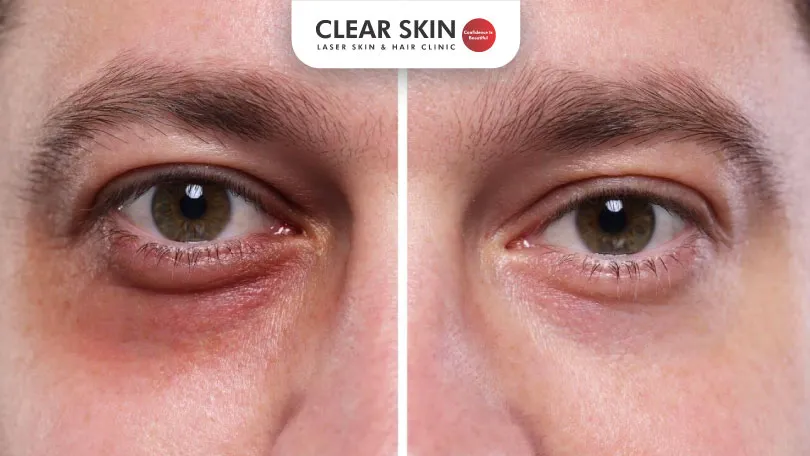
Dark circles under the eyes are a common issue that can make you look older and more tired. They can be caused by various factors, including genetics, aging, sleep deprivation, allergies, and lifestyle choices.
In this blog, we’ll explore the causes of under-eye dark circles and discuss effective treatments, ranging from home remedies and lifestyle changes to medical and surgical options.
Table Of Content
- What Causes Dark Circles Under Your Eyes?
- Why Dark Circles Occur And How To Treat Them
- Types of Under Eye Dark Circles
- Professional Medical Treatments for Dark Circles
- How to Prevent Dark Circles?
- Home Remedies
- Lifestyle Changes
- FAQs
- Why Choose Clear Skin Clinic for Under Eye Dark Circles Treatment?
- Conclusion
What Causes Dark Circles Under Your Eyes?
Dark circles can develop for a range of reasons—it’s rarely just one factor. In our clinical experience, we commonly see the following contributors:
- Genetics: Many people inherit a tendency for periorbital hyperpigmentation or visible blood vessels, making dark circles more noticeable even from a young age.
- Aging: As you age, your skin gets thinner and you gradually lose collagen and fat under the eyes. This process makes underlying blood vessels and structural changes more apparent, deepening the shadowing.
- Lifestyle Factors: A chronic lack of sleep, stress, dehydration, smoking, excessive alcohol or caffeine consumption, and poor nutrition all contribute to the appearance of dark circles by affecting skin health and circulation.
- Allergies and Nasal Congestion: These can dilate and darken the tiny blood vessels under the eyes or increase rubbing and irritation, both of which worsen darkness.
- Sun Exposure: UV rays trigger more melanin production, which can increase pigmentation around the delicate under-eye area.
- Medical Conditions: Conditions like iron-deficiency anemia (reduced oxygen delivery to tissues), eczema, thyroid disease, and some medications can increase darkness or puffiness under the eyes.
- Fluid Retention: Hormonal changes, high salt intake, and some medical conditions may cause under-eye puffiness, exaggerating shadowing.
- Eye Strain: Spending long hours on digital devices can cause blood vessels to dilate, creating a darker appearance.
Because dark circles often arise from a combination of factors, an accurate diagnosis is the first step toward effective treatment.
Why Do Under Eye Dark Circles Occur?
Before we can treat dark circles, we must understand why they appear. It’s not always about lack of sleep. The delicate under-eye area is prone to showing discolouration for several key anatomical reasons.
- Thin Under-Eye Skin: The skin here is the thinnest on your entire body, sometimes less than 0.5 mm thick. This means the underlying structures, like muscles and blood vessels, are much more visible than anywhere else.
- Blood Vessel Visibility: When blood pools in the capillaries beneath your eyes, it can show through the thin skin as a bluish or purplish tint. Factors like dehydration, allergies, and fatigue can make these vessels more prominent.
- Pigmentation and Volume Loss: Genetics and sun exposure can lead to an overproduction of melanin, creating brown patches. Separately, as we age, we lose fat and collagen, creating a hollowed-out look or a “tear trough” that casts a shadow, which is often mistaken for true discolouration.
The right under-eye dark circles treatment depends entirely on diagnosing and targeting the underlying cause.
Types of Under Eye Dark Circles
| Type | Appearance | Pinch Test | Common Cause | Treatment |
|---|---|---|---|---|
| Vascular | Blue/purple tinge | Fades when stretched | Thin skin, poor circulation | Vitamin K, cold compress, caffeine |
| Pigmented | Brown/dark, even colour | Stays same when stretched | Melanin, sun exposure | Kojic acid, laser, azelaic acid |
| Structural | Shadow, not actual dark colour | No colour present | Volume loss, hollow tear trough | Hyaluronic acid filler |
| Allergy-related | Puffy + dArk | Variable | Histamine response | Antihistamines + treatment |
Type 1: Vascular Dark Circles
The blood vessels running under the thin periorbital skin appear through the skin surface, creating a blue, purple, or pinkish tinge.
Causes: Thin under-eye skin (genetic or aging), poor sleep, dehydration, alcohol, and allergies that dilate blood vessels.
Treatment:
- Vitamin K cream — improves blood vessel integrity and reduces their visibility
- Caffeine eye cream — temporarily constricts blood vessels and reduces puffiness
- Cold compress or chilled eye patches — immediate but temporary effect
- Laser (Nd:YAG) — for persistent vascular dark circles (clinic treatment)
- Adequate hydration and 7–9 hours of sleep significantly improve vascular dark circles
Type 2: Pigmented Dark Circles
The most common type in Indian and South Asian skin. Actual melanin is deposited in the skin under the eyes, creating a brown or dark colouration.
Causes: Sun exposure (UV triggers melanin production even through thin eyelid skin), post-inflammatory hyperpigmentation, friction from eye rubbing, and genetic predisposition in darker skin tones.
Treatment:
- Kojic acid eye cream — inhibits melanin production
- Azelaic acid — reduces pigmentation safely
- Niacinamide (5%) — reduces melanin transfer to skin cells
- Chemical peel (superficial) — glycolic or lactic acid for gradual lightening
- Q-switch Nd:YAG laser — most effective for stubborn pigmented dark circles
- Mandatory: SPF around the eye area — without sun protection, treatments have limited lasting effect
Why pigmentation is more common in Indian skin
Type 3: Structural (Hollow Tear Trough) Dark Circles
No actual darkness or colour change — the shadow created by a hollow or sunken area under the eye creates the appearance of dark circles. This is a volume issue, not a pigmentation issue.
Causes: Natural volume loss with aging, genetic deep-set eye structure, or significant weight loss.
Treatment:
- Hyaluronic acid filler (tear trough filler) — the most effective treatment, fills the hollow, eliminates the shadow. Duration: 9–18 months. Must be performed by an experienced dermatologist or plastic surgeon.
- Eye creams and topical treatments do not address structural dark circles. This is a common source of treatment frustration.
Type 4: Allergy-Related Dark Circles
Allergic reactions release histamine, which dilates blood vessels and causes both puffiness and dark discolouration. Often accompanied by watery eyes, sneezing, and nasal congestion.
Causes: Seasonal allergies, food allergies, pet dander, dust mites, or contact allergy to eye cosmetics.
Treatment:
- Identify and avoid the allergen
- Oral antihistamines (cetirizine, fexofenadine)
- Topical antihistamine eye drops for itching
- Cold compresses for puffiness
आंखों के काले घेरे – कारण और उपाय (Under Eye Dark Circles: Causes & Treatments)
Professional Medical Treatments for Dark Circles
Patients frequently ask about the most effective medical treatments for under-eye dark circles, especially when home remedies and lifestyle changes are not enough. As a dermatologist, I approach each patient with a customised plan based on the cause—pigmentation, vascular changes, or volume loss.
Here are the leading options:
- Topical Depigmenting Creams: Medical-grade creams with ingredients such as kojic acid, hydroquinone, arbutin, retinoids, or vitamin C target excess melanin, reducing pigmentation over time. These are best for pigmented dark circles and should be prescribed by a dermatologist to minimise side effects.
- Chemical Peels: Gentle, under-eye-safe peels like lactic, glycolic, or mandelic acid can exfoliate the superficial layers, fade pigmentation, and improve skin texture. They are especially effective for patients with brown or mixed-type dark circles. Peels must always be performed under professional supervision due to the sensitivity of the under-eye skin.
- Laser Treatments: Q-switched or fractional lasers specifically target melanin deposits or dilated blood vessels. Lasers can be very effective for both pigmented and vascular dark circles but require careful medical assessment to match the technology with your skin type and concern.
- Platelet-Rich Plasma (PRP) Therapy: PRP Treatment uses concentrated platelets from your own blood to stimulate tissue repair and collagen production, making the skin thicker and more radiant. This treatment is suitable for both vascular circles and mild hollowness.
- Hyaluronic Acid Fillers: For hollow or sunken under eyes, soft dermal fillers restore lost volume and immediately reduce shadowing. When injected by an experienced dermatologist, fillers provide a natural contour and refreshed look. It’s important to note that creams cannot correct this type—structural replenishment is required.
- Microneedling: This technique boosts collagen regeneration in thin under-eye skin and helps with both pigmentation and mild texture irregularities.
- Combination Approaches: In many cases, especially with mixed-type dark circles, we combine treatments (e.g., lasers + fillers, or peels + PRP) for optimal results.
Before choosing a procedure, it’s essential to undergo a thorough dermatological evaluation to identify your primary dark circle type and to ensure the safest, most suitable solution for your needs. At Our Skin Specialist Clinic in Pune, every treatment plan is tailored for long-term improvement with maximum safety.
Schedule a personalised dark circle treatment consultation in Pune
How to Prevent Dark Circles?
Everyone wishes to have a youthful-looking skin over the face and around the eyes. Here are a few tips to help you prevent dark circles.
- Apply sunscreen daily 2–3 times a day. Sunscreen should be applied 15–20 min before you step out of your house and get exposed to sun rays. Use broad-spectrum sunscreen with the SPF of 30 or SPF 50. Don’t forget to apply over your eyes with fingertips.
- Wear wide-brimmed hats and sunglasses when you go out so that you can avoid sun exposure. Try to stand under the shade whenever it is possible.
- Try to avoid sun-exposure on-peak hours from 10 am to 4 pm.
- Protect your skin from pollution & environmental factors.
- Avoid frequent friction to your eyes.
Home Remedies
The consistent application of dark circles remedies at home for a month or more can mitigate the darkness under your eyes while improving the complexion of the skin beneath. These home remedies address a variety of causes, including genetics and aging; and while they may not completely eliminate the enemy, they certainly improve its appearance.
- Cold Compress: Using either a cold washcloth, bag of frozen peas, cold tea bags, or cooled cucumbers can be soothing and improve circulation beneath the eyes. Massaging the eye area with ice cubes also works.
- Applying Topical Ingredients: Applying topically natural ingredients rich in vitamins A, C, E, and K would also help to lighten the dark circles and maintain the skin integrity. Lemons, papayas, tomatoes, cucumbers, kiwis, berries, almond oil, olive oil, eggplant, and banana peel are some examples.
- Coconut Oil: Labelled as one of the most effective home remedies for lightening dark circles under eyes fast, coconut oil also moisturizes the skin, thus, preventing wrinkles and reducing fine lines under the eyes.
Lifestyle Changes
May initially be difficult to incorporate but would be worth the effort by not only gifting you with flawless, glowing skin, but also a healthier outlook overall, and renewed vitality for life.
- Sleep: Quality sleep is important for eradicating dark circles, and also for your immune system, memory, heart health, and other functions. Sleep for at least 8 hours a day, in a position that best affords you restful sleep. Prefer sleeping on your back, with head elevated with an extra pillow to avoid pooling of fluid beneath your eyes.
- Vices: Quit smoking and limit alcohol. Nothing dehydrates the body more than alcohol. Control your alcohol intake. If you are consuming alcohol on a given day, remember to drink at least two glasses of water before going to bed.
- Caffeine: I know most people can’t function without a few glasses of caffeine in the morning, but this severely dehydrates your skin and makes dark circles more prominent. Instead, applying it topically has a mild constricting effect on the blood vessels, making them less prominent.
- Stay Hydrated: The skin under the eyes is thin and is prone to dehydration. Drink lots of water so that you are not dehydrated. Also, too much salt in your diet, while not having enough water will make your eyes look puffy and result in dark circles.
- Combat Stress: With yoga, meditation, counseling, hobbies, etc.
- Itch: Get your allergies treated with antihistamines and other medications.
- Avoid Sun Exposure: Use sunscreen (SPF 30) daily.
- Moisturise: The skin under the eyes is delicate, and often less oily than on the rest of the face. To prevent it from drying, which would make the dark circles worse, moisturize frequently. Apply at night so that the skin can absorb it and repair itself.
Frequently Asked Questions (FAQs)
- Is laser treatment safe for under-eye dark circles?
Yes, when performed by a skilled dermatologist using the appropriate device, laser treatment is very safe. We use specific Q-switched lasers that target only the excess pigment without harming the delicate surrounding skin. We also provide protective eye shields during the procedure to ensure complete safety for your eyes.
- Which treatment works fastest for dark circles?
For hollow, sunken eyes, hyaluronic acid fillers provide the fastest results, with a noticeable improvement immediately after the procedure.
For pigmentation, treatments like chemical peels and lasers show results over a series of sessions, typically spaced a few weeks apart, as the skin needs time to heal and regenerate.
- Are dark circles a sign of a medical problem?
While most dark circles are benign, they can sometimes be a sign of underlying issues like anaemia (iron deficiency), thyroid problems, or chronic allergies.
If your dark circles appear suddenly or are accompanied by other symptoms like fatigue or shortness of breath, it’s a good idea to consult a doctor.
- Do under-eye fillers look natural?
Absolutely. In experienced hands, the goal of under-eye fillers is restoration, not augmentation. We use a soft, flexible filler and inject it deep along the bone to subtly lift the hollow area.
The result is a refreshed, well-rested appearance that looks completely natural, not “puffy” or “done.”
Why Choose Clear Skin Clinic for Under Eye Dark Circles Treatment?
Choosing the right clinic is paramount for a safe and successful outcome, especially for the delicate under-eye area.
- Dermatologist-Led Evaluation: At ClearSkin, every consultation and treatment is led by a qualified dermatosurgeon. We perform a thorough diagnosis to identify the exact cause of your dark circles.
- Cause-Based Treatment Planning: We create a personalised plan based on our findings. We don’t sell you a single service; we create a solution.
- Experience with Indian Skin Types: We have extensive experience treating the unique challenges of Indian skin, particularly its tendency towards pigmentation.
- Safe Under-Eye Protocols: Our techniques and technologies are specifically chosen for their safety and efficacy in the periorbital region.
- Combination Approach: We commonly see patients who have multiple contributing factors. We are experts at combining treatments like fillers, lasers, and peels in a single plan for comprehensive results.
Do You Know?
Roughly 250 Patients Are Treated
Everyday By These Dermatologists
(You are one click away from flawless skin)
Meet Our Dermatologist!





Conclusion
Under-eye dark circles can significantly impact your appearance and confidence, but understanding their causes and treatment options makes a real difference. While lifestyle changes and home care can help in mild cases, persistent or worsening dark circles often need a medical approach based on the underlying cause. With the right diagnosis and a personalised treatment plan, it is possible to achieve visible, long-term improvement.
If you are struggling with dark circles despite trying multiple remedies, a professional skin evaluation can help identify the exact type and the most effective treatment. Consult a dermatologist for dark circle treatment in Pune to receive a customised plan designed specifically for your skin, with a focus on safety, natural results, and long-term care.
Further Reading
Gym & Sweat Acne: Causes & Prevention | Clear Skin Pune
Gym acne (acne mechanica) is caused by sweat, heat, and friction. Learn where it appears, why Pune’s humidity worsens it, and how to prevent breakouts.
Best Treatments for Back Acne and Body Scars
Struggling with back acne and body scars? Learn about effective home remedies and professional treatments to achieve clear, blemish-free skin.
Melasma Treatment Reviews in Pune | Clear Skin
Real Clear Skin Pune patient results for melasma treatment – see before and after outcomes after laser and chemical peel, and what to expect.
Best Treatment for Pigmentation on Face
Discover top treatments for pigmentation on the face. Get clear, even-toned skin with dermatologist-recommended pigmentation solutions in Pune.
Have thoughts? Please let us know
We are committed not only to treating you, but also educating you.